


Chickens, How To, Info Guides
How to Keep Chicken Coop from Getting Too Muddy

Jun
 ChatGPT
 Claude
 Perplexity
 Grok
Grok
 Google AI
 You
You
 WhatsApp
 LinkedIn
If you’re anything like me, your chickens are more than just birds, they’re family. But let’s face it, keeping your chicken coop clean and dry can be quite a challenge.
Muddy coops are a very common problem customers ask me about, especially in wetter climates or in coops with lots of chickens. Mud doesn’t just look messy! It can leave your chickens constantly damp and dirty, which softens their feet, increases the risk of infections like bumblefoot, and creates the perfect environment for bacteria and parasites to thrive.
If you’re ready to tackle the challenge of maintaining a mud-free coop, whether you’re a seasoned keeper or new to chicken raising, let’s learn how to keep your chicken coop from getting muddy!
Key Takeaways
- Using ground covers like wood chips, straw or grass clippings can help keep your chicken run dry. Combining different materials often works best.
- Improving drainage by fixing low spots, adding gravel or stone borders, and redirecting water with gutters helps prevent pooling and mud.
- Keeping your coop dry and clean requires using absorbent bedding, cleaning regularly, ensuring good ventilation, and promptly managing spilled feed or water.
- Giving your chickens free-range time, rotating them across different areas, encouraging foraging, and providing dust baths helps reduce wear on one area and keeps the run drier.
- A well-designed Somerzby coop provides plenty of space, easier access for maintenance, and good ventilation, all of which contribute to keeping the coop dry and comfortable for your flock.
Best Ground Cover Options to Prevent Mud in Chicken Runs
If you’re tired of dealing with a muddy chicken run every time it rains, you’re not alone. Ground cover plays an important role in absorbing excess moisture and improving drainage, helping to minimise muddy conditions. While no single material is perfect, combining a few different ground covers in the same area can often give the best results.
Wood Chips
Wood chips and pine shavings are inexpensive, readily available, and incredibly effective at absorbing moisture, ensuring your chickens can strut around without getting their feet caked in mud.
When choosing wood chips for your coop, look for larger chips rather than fine sawdust as the bigger chips will last longer and provide better drainage.
To ensure proper coverage, aim to keep the woodchips level, creating a layer approximately 2-3 inches thick across the entire run area, and be sure to replace them as needed when they start to break down.
Straw and Hay
Straw and hay are my personal choice to prevent muddy chicken coops. When spread generously over muddy areas, they provide a dry and comfortable surface for chickens’ feet to navigate.
Their absorbent nature helps soak up excess water, reducing the risk of bacterial growth and foul odours.
Straw and hay serve as excellent chicken coop bedding options, providing insulation against cold temperatures to keep the coop warmer in cooler months.
Consistently replenishing the straw or hay is crucial to maintain its effectiveness in preserving a clean and healthy environment for the chickens.
Pine Needles
Another option for ground cover is pine needles. If you have pine trees on your property, you can easily collect the fallen needles and spread them in your chicken run.
This option provides a pleasant scent and can help repel insects, but they do break down more quickly than wood chips.
While pine needles can be a good choice for a dry chicken run, they’re not the best option if you’re dealing with a lot of mud.
They tend to mat down and can actually make the mud problem worse over time. If you do decide to use pine needles, be prepared to replace them more frequently than wood chips.
Rubber Mats
Rubber mats are another viable option to consider, particularly in high-traffic areas of your chicken run. You can place them near the coop door, under feeders and waterers, or anywhere else where muddy conditions are common.
Rubber mats provide a solid surface for your chickens to walk on and can help prevent mud from being tracked into the coop.
Look for mats with a textured surface to provide good traction for your chickens’ feet. You can easily hose off the mats when they get dirty, and they’ll last for years with proper care.
Small Pebbles or Gravel
For a more permanent solution to mud in your chicken run, consider using small pebbles or gravel. A layer of pebbles or gravel can help improve drainage and prevent mud from forming in the first place.
It’s important to choose the right size pebbles, though – too small and they can be difficult for your chickens to walk on, too large and they won’t provide enough drainage.
Keep in mind that while this option can be effective, it can also be more expensive than other ground cover choices.
Grass Clippings
If you have a large lawn and regularly mow your grass, you may want to consider using your grass clippings as a ground cover in your chicken run. Grass clippings are free, readily available, and can help absorb moisture in the run.
Just be sure to use clippings from a lawn that hasn’t been treated with any chemicals or pesticides.
Grass clippings decompose rapidly, so you’ll want to top up your ground cover frequently to keep it looking fresh. Consider blending wood chips or other materials with your grass clippings to make them last longer.
How to Improve Drainage in Your Chicken Coop Area
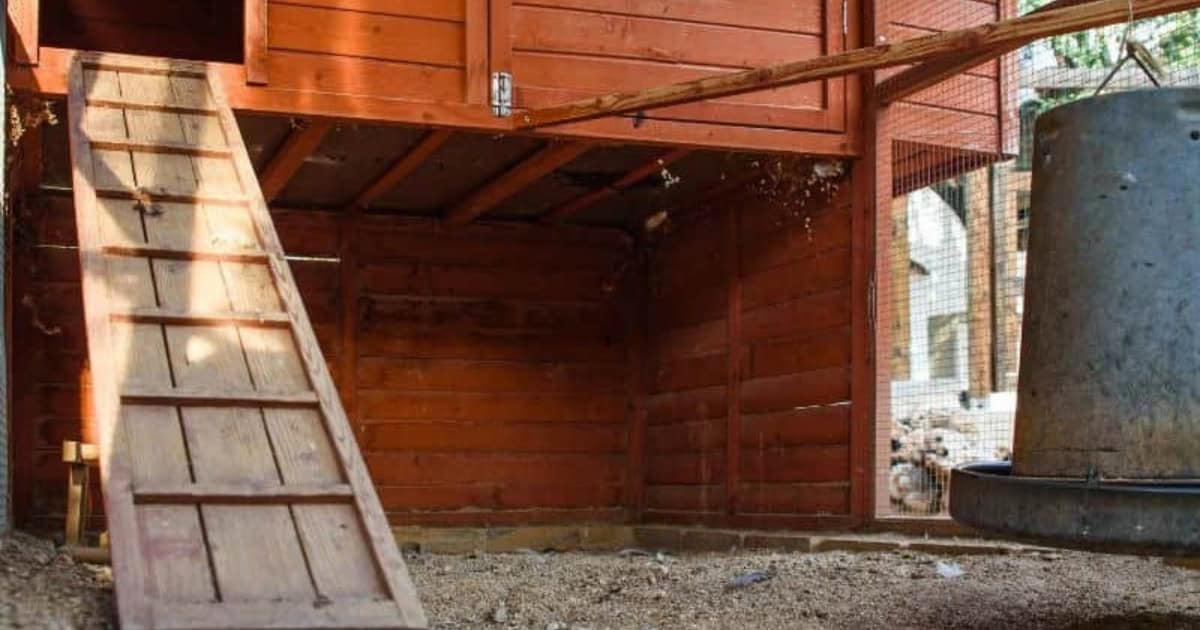
In addition to using ground cover options to prevent mud, it’s also important to make sure your chicken coop area has good drainage.
Standing water and poor drainage can lead to a host of problems, including muddy messes, odours, and even health issues for your chickens.
Identify and Address Grading Issues
One of the first steps in improving drainage around your chicken coop is to identify any grading issues. Take a look at the ground around your coop and run – does it slope away from the structure, or does water tend to pool in certain areas? Pay extra attention during periods of heavy rainfall.
If you notice any drainage issues such as low spots or areas where water collects, you may need to regrade the soil to encourage proper drainage.
Create a Well-Drained Area
In addition to fixing grading issues, you can create a well-drained area around your chicken coop by surrounding it with materials that encourage good drainage.
Gravel or stone borders are a great option – they’ll help water flow away from the coop, keeping everything nice and dry.
Redirect Water Away from the Coop
Another way to improve drainage around your chicken coop is to redirect water away from the structure.
This can be as simple as installing gutters and downspouts on your coop to channel water away from the coop or create shallow ditches to direct and drain water away.
Tips for Maintaining a Dry and Clean Chicken Coop
Maintaining your chicken coop and keeping it dry and clean is essential for the health and happiness of your flock.
In addition to using ground cover options and improving drainage, there are several other steps you can take to prevent a muddy chicken coop. Regular maintenance helps you stay ahead of problems and is far less stressful than dealing with muddy conditions once they’ve set in.
Use Absorbent Bedding Materials
One of the most important things you can do to keep your chicken coop dry is to use absorbent bedding materials. Wood shavings, shredded paper, and hay are popular choices for coop bedding. They’re affordable, readily available, and do a great job of absorbing moisture and odours.
Clean Regularly
Plan to clean your coop at least once a week, or more often if needed. Remove any wet or soiled bedding, and replace it with fresh, dry material.
Use a shovel to remove any built-up chicken poop or debris, and consider using a natural cleaning solution to disinfect surfaces.
Provide Adequate Ventilation
Proper ventilation is another key factor in keeping your chicken coop dry and clean. Good ventilation helps regulate temperature and humidity levels and prevents the buildup of harmful ammonia gases from chicken manure.
When designing your coop, be sure to include plenty of windows or vents to allow for good airflow. Cover any openings with wire to prevent predators from entering the coop.
Manage Spilled Feed and Water
Finally, it’s important to manage any spilled feed or water in your chicken coop to prevent moisture buildup and mould growth. Use feeders and waterers that are designed to minimise spills, and clean up any spills promptly.
Checking Conditions After Severe Weather
Keeping a close eye on your flock is always important, but even more so after periods of heavy rain or rough weather. Make it a habit to check your coop and run daily, and increase how often you check during wet conditions. This helps you spot and fix small issues early, before they turn into bigger problems.
Utilising Free-Range Time to Minimise Mud in the Coop
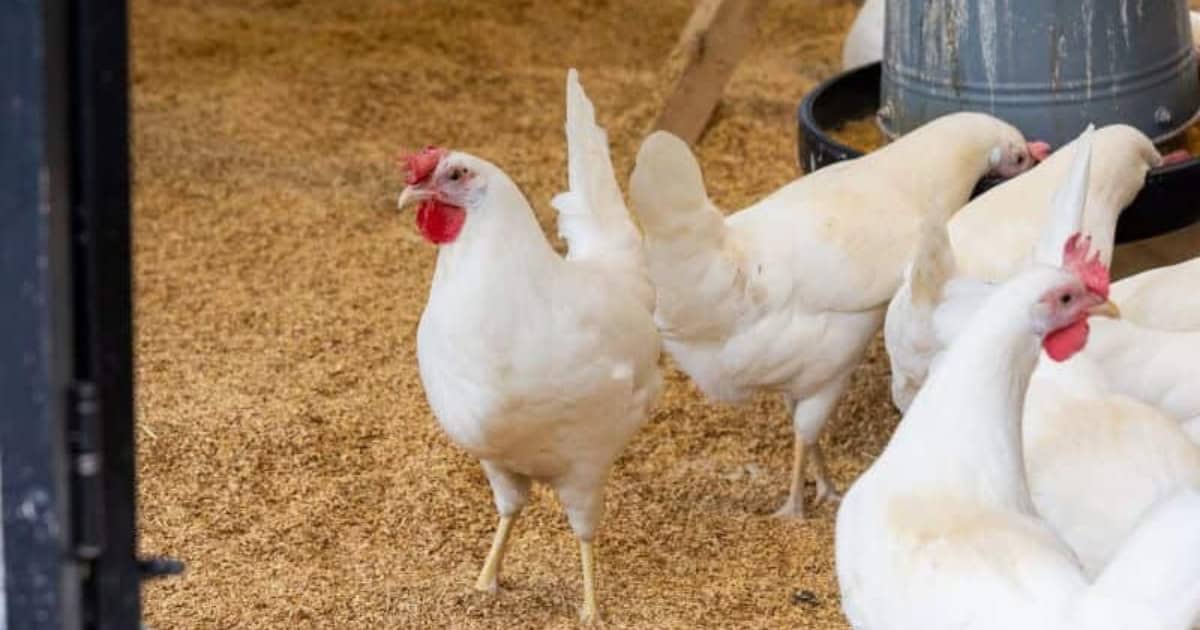
While ground cover and improved drainage can do a lot to prevent mud in your chicken coop and run, another effective strategy is to give your chickens regular free-range time. When chickens repeatedly walk over the same area, they wear down the ground cover, which increases muddy spots. Allowing them to rotate to different areas helps spread out foot traffic and keeps the ground drier.
Encourage Foraging
Chickens and mud don’t mix well. To keep your feathered friends clean and dry, encourage them to forage in other parts of your yard or property.
To encourage foraging, you can create designated foraging areas in your yard by planting chicken-friendly plants, such as clover, dandelions, or chickweed.
You can also scatter scratch grains or other treats in areas away from the coop to encourage your chickens to explore.
Rotate Free-Range Areas
If you have a large enough property, you may also want to consider rotating your chickens’ free-range areas to prevent overgrazing and minimise mud. By moving your chickens to a new area of the yard every few weeks or months, you can give each area time to recover and regrow.
If space is limited, you can achieve a similar effect by temporarily blocking off sections of their run.
Provide Designated Dust Bathing Spots
Want to keep your chicken coop mud-free? Set up a dust bath area outside for your feathered friends to clean themselves and prevent parasites.
Chickens go crazy for a good dust bath, so giving them their own designated spot will help keep the mud out of their living space.
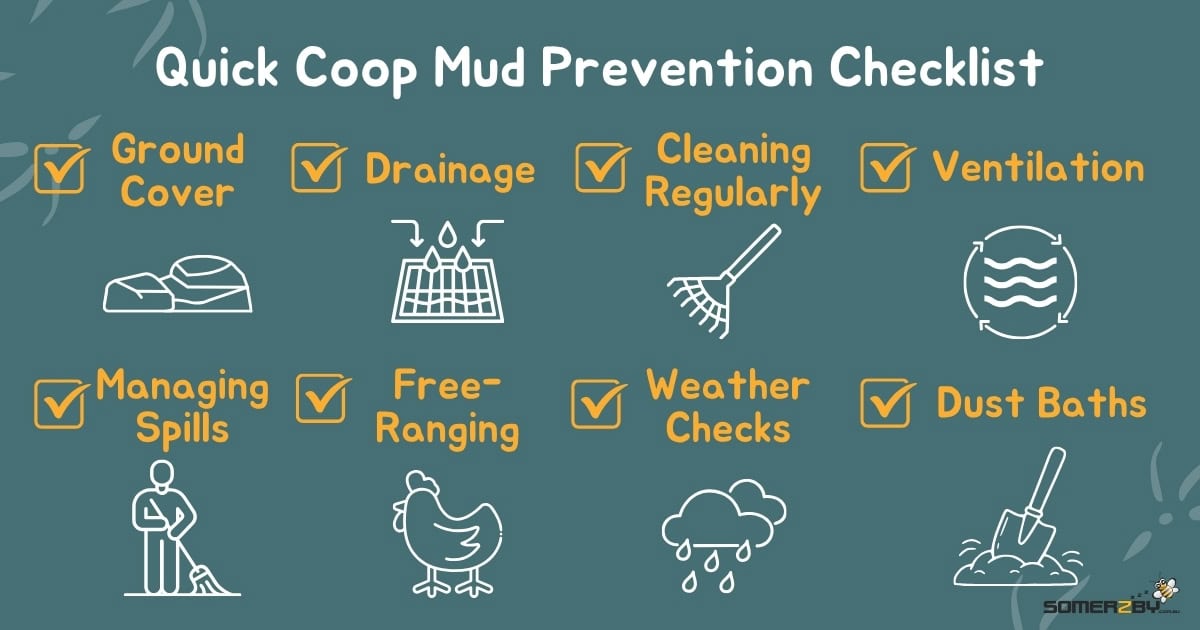
Quick Coop Mud Prevention Checklist
Here’s a simple checklist to keep your chicken coop and run dry, healthy, and mud-free:
- Ground Covers: Use wood chips, straw, hay, pine needles, rubber mats, small pebbles/gravel, or grass clippings. Consider combining materials for best results.
- Drainage: Regrade low spots, create gravel or stone borders, and redirect water away from the coop with gutters or shallow ditches.
- Cleaning Schedule: Clean coop at least once a week, removing droppings and debris to prevent moisture buildup.
- Ventilation: Ensure windows or vents provide good airflow to reduce humidity and ammonia buildup.
- Spill Management: Use spill-resistant feeders and waterers and clean up any spills promptly.
- Free-Range & Rotation: Rotate chickens to different areas to prevent overuse of one spot and encourage foraging.
- Dust Bath Areas: Provide a designated dust bath to help chickens stay clean and reduce mud inside the coop.
- Weather Checks: After heavy rain or storms, check the coop and run for wet or muddy areas and fix issues quickly.
How a Somerzby Coop Can Help
Preventing mud isn’t just about the ground. It’s also about keeping your flock healthy and comfortable. Tackling a muddy coop doesn’t have to be stressful or complicated.
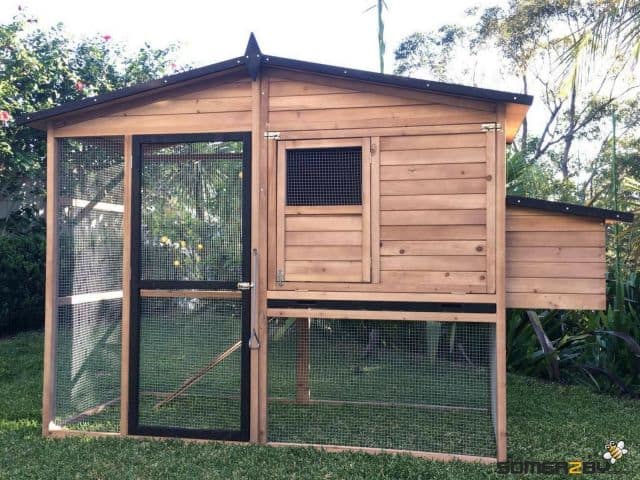
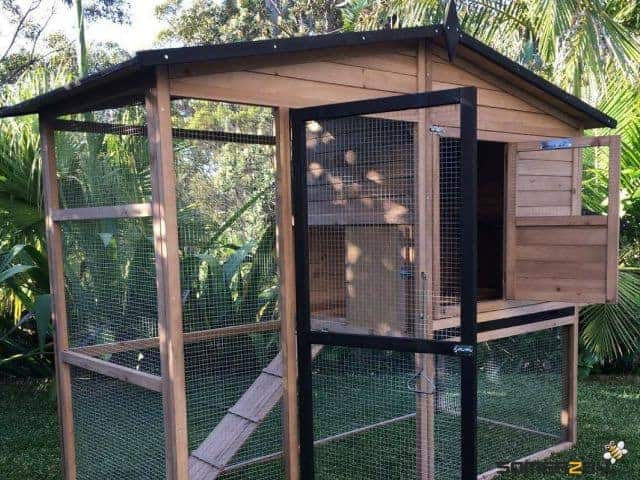
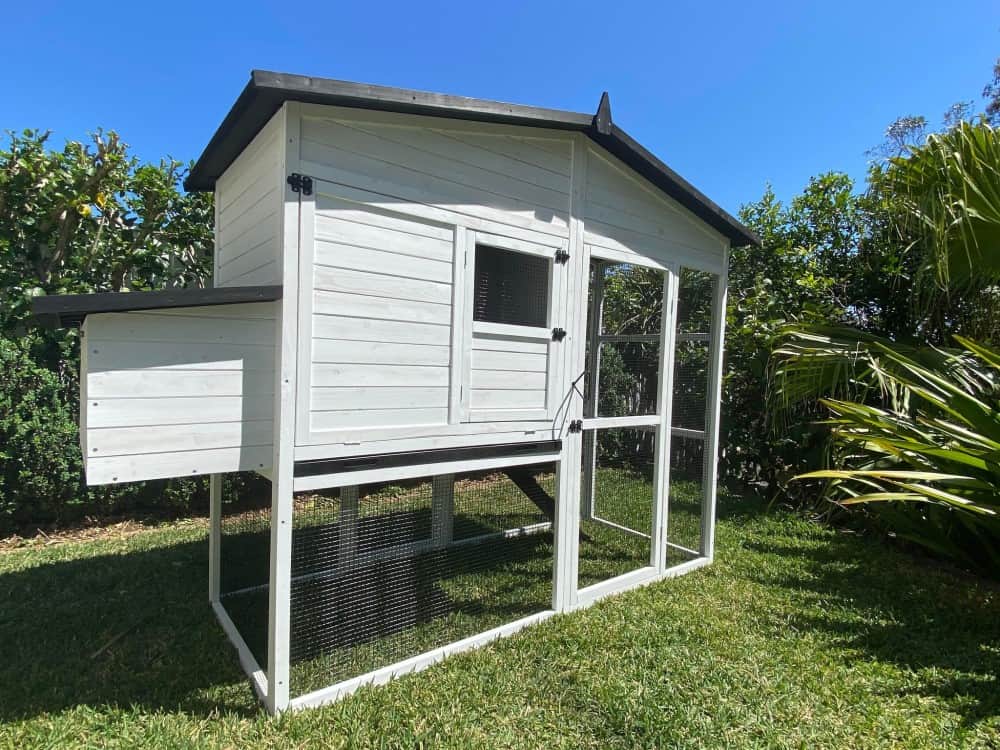
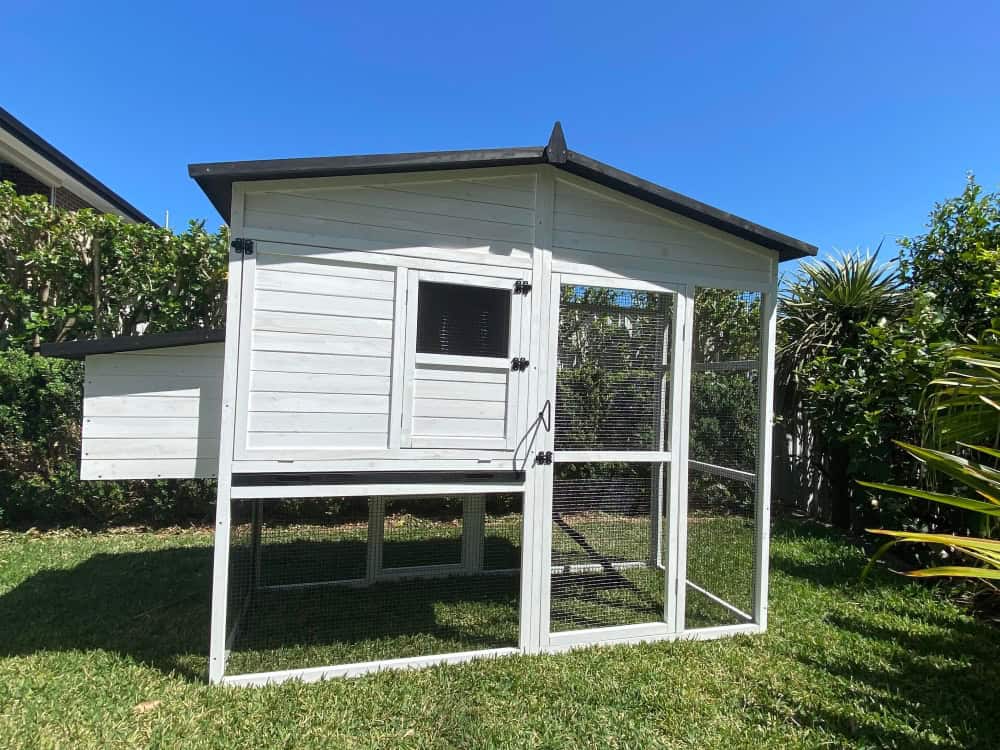
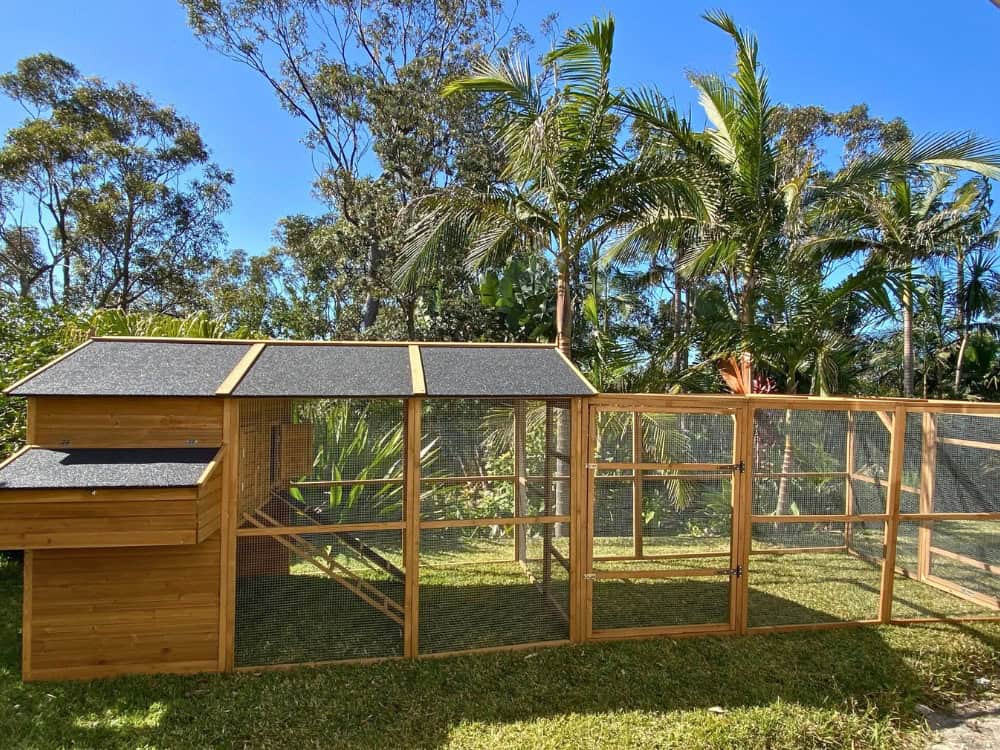
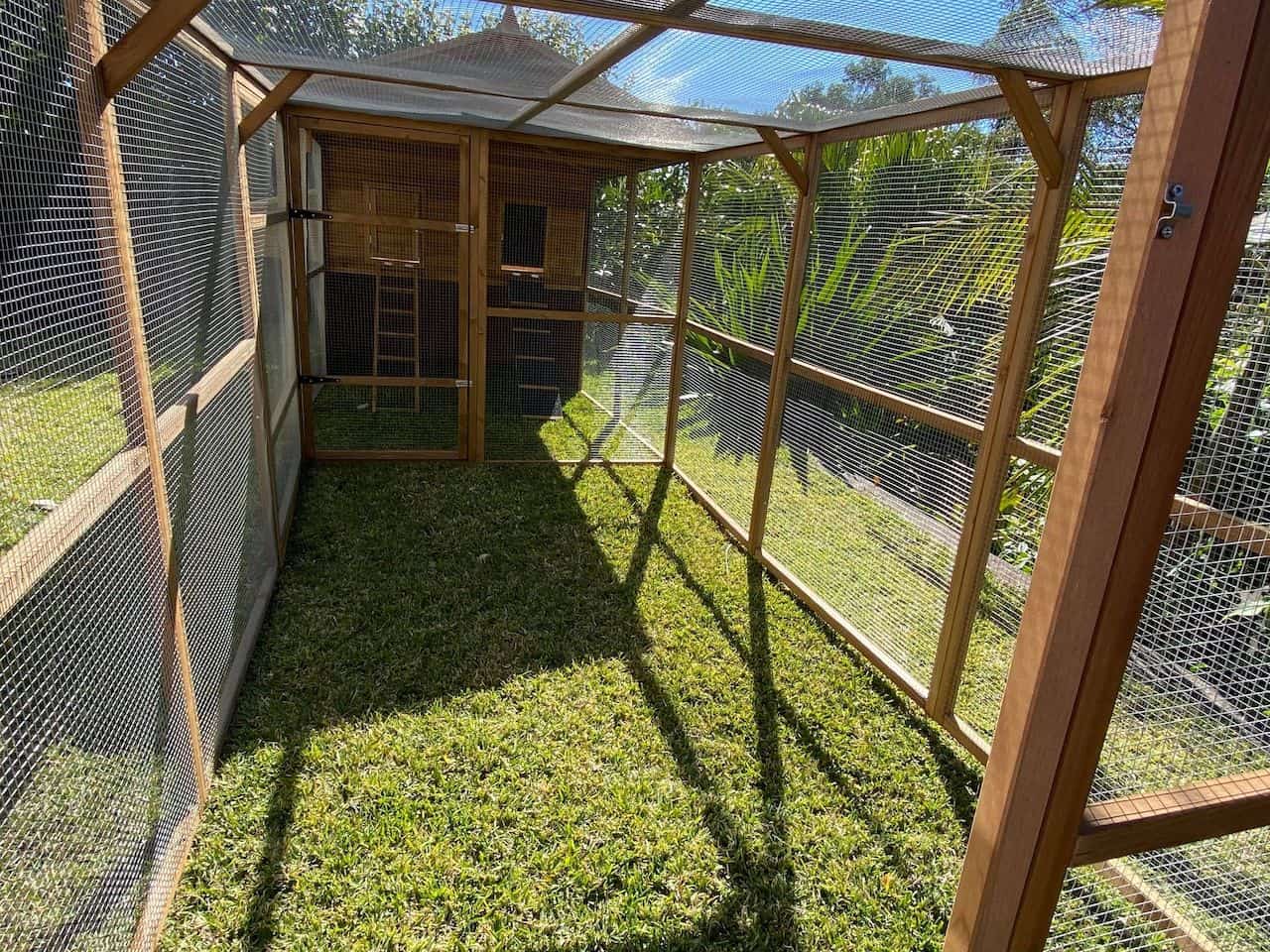
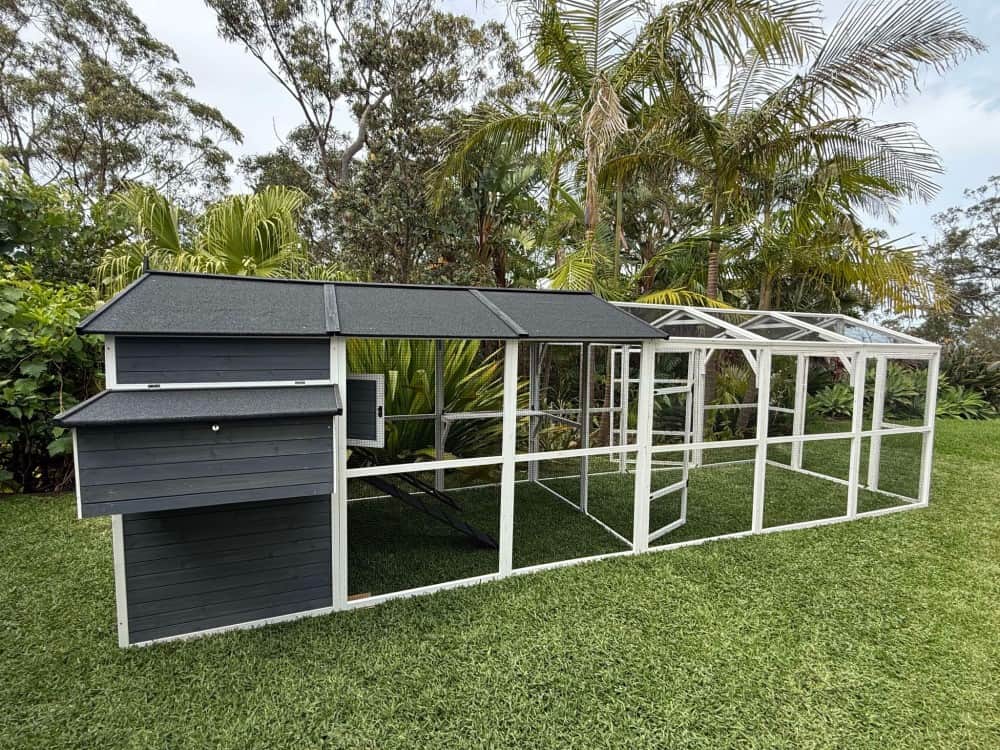
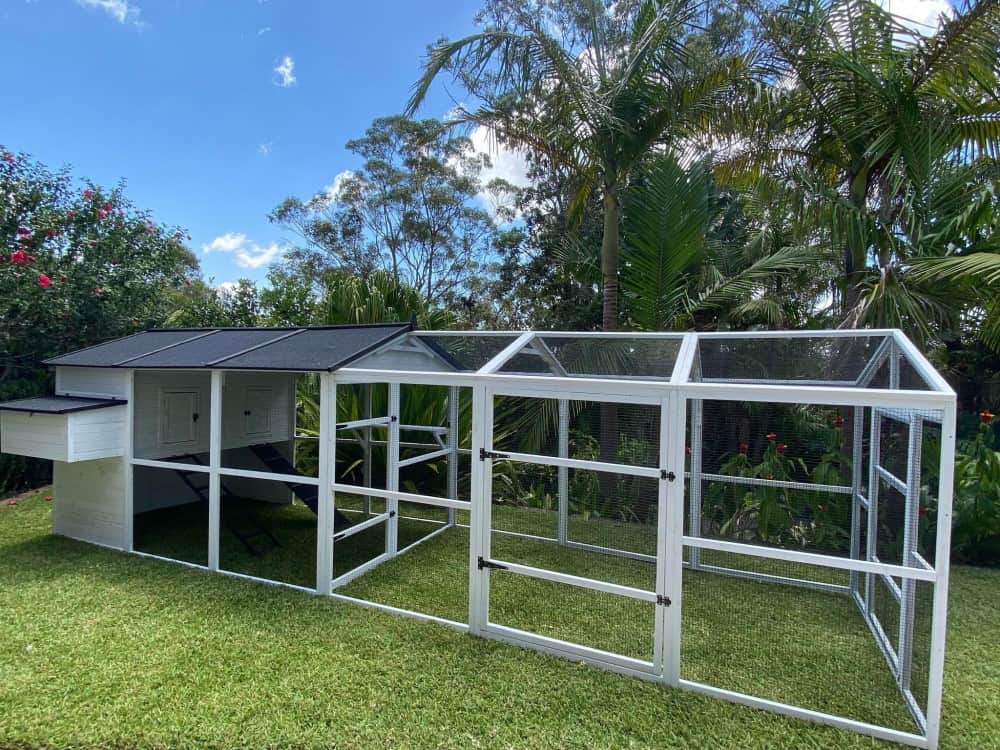
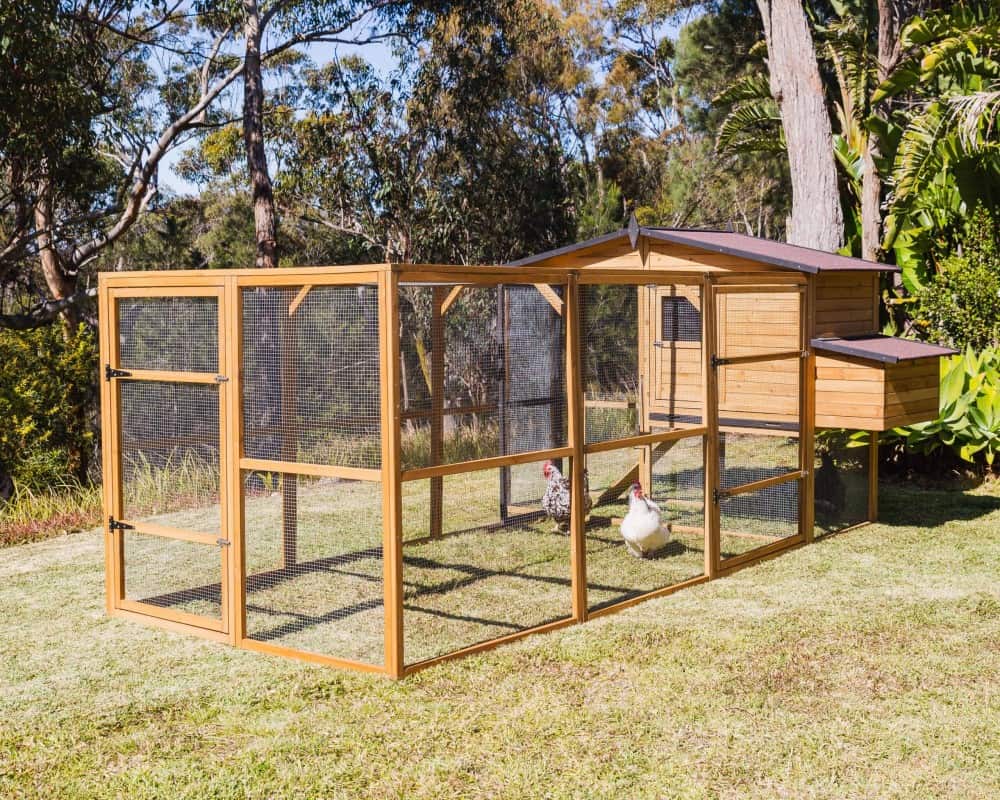
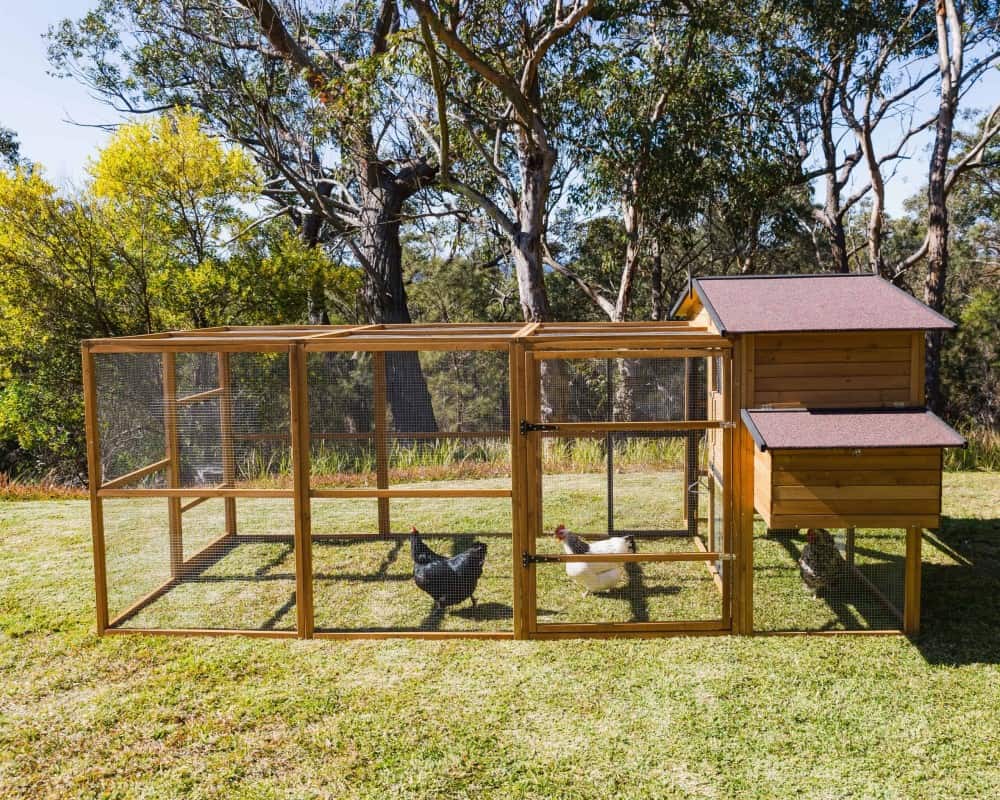
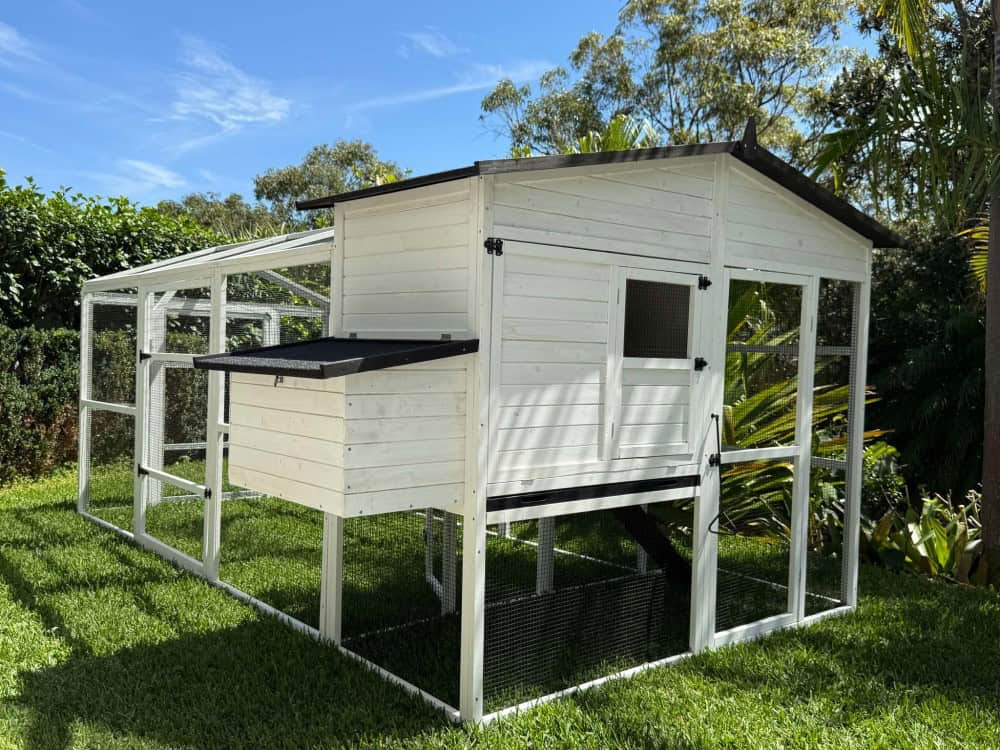
A well-designed Somerzby coop can make a real difference. Our larger coops provide plenty of space for chickens to spread out, high access makes maintaining ground cover easier, and good ventilation helps keep the coop dry and healthy.
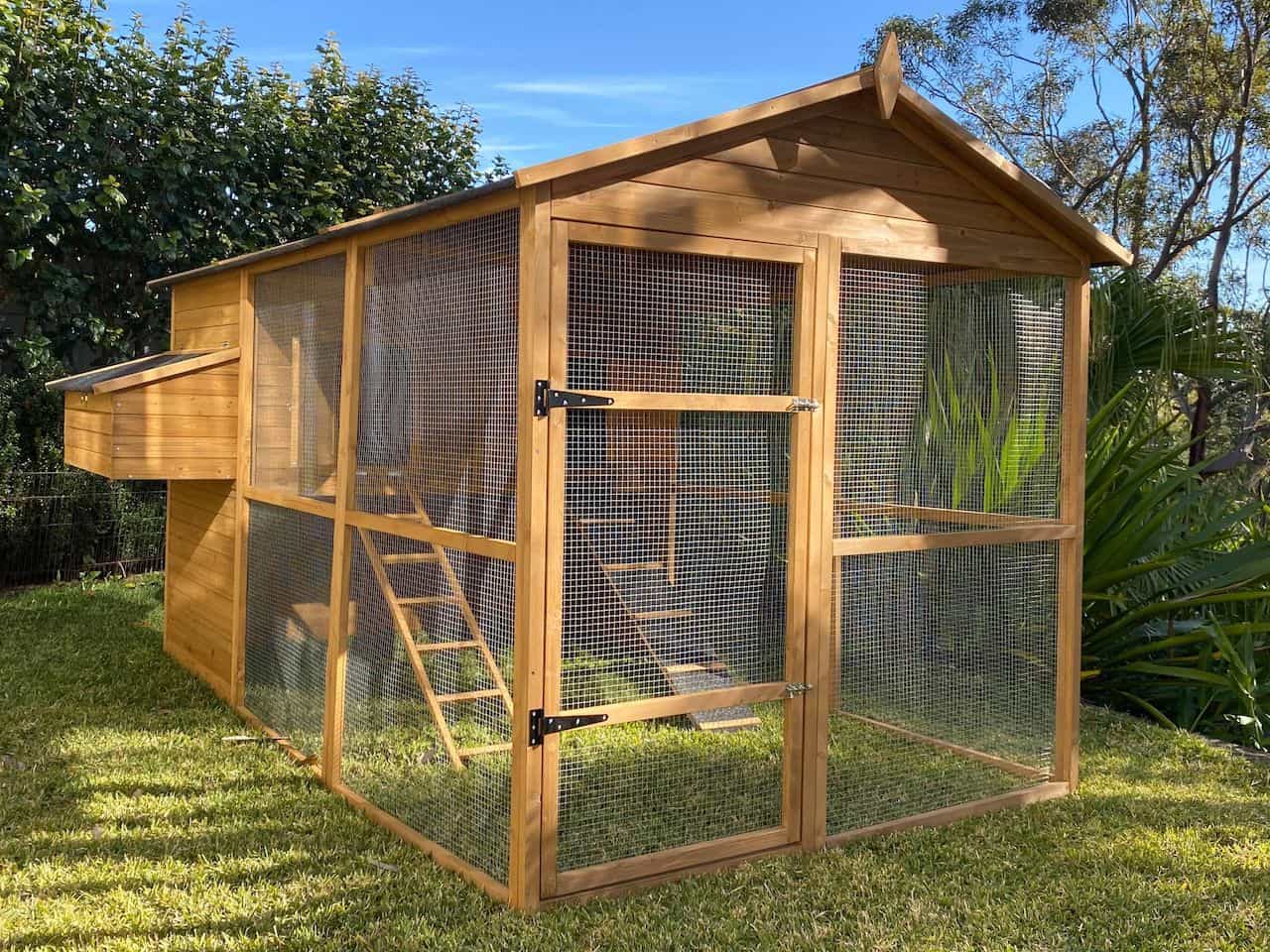
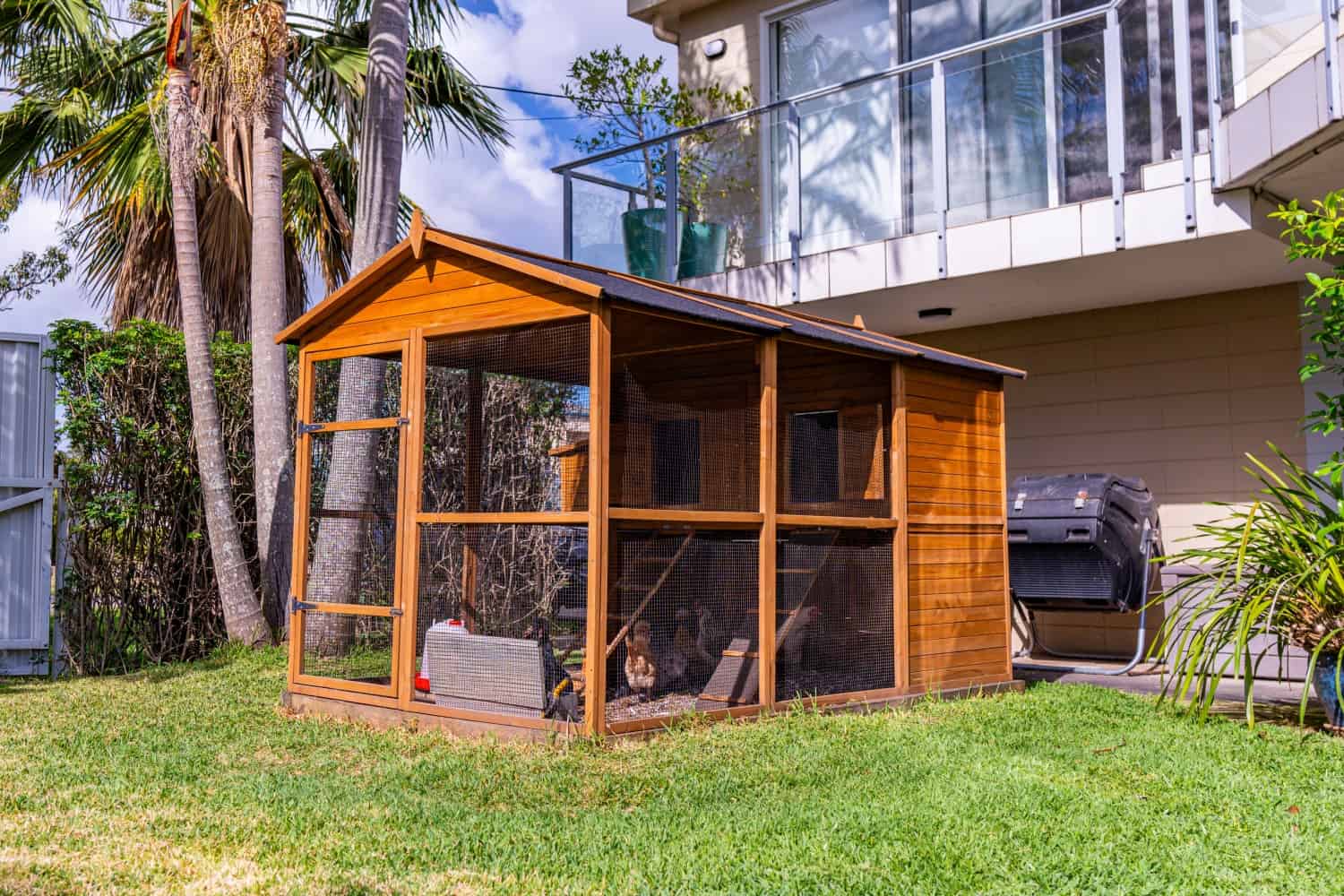
All Products
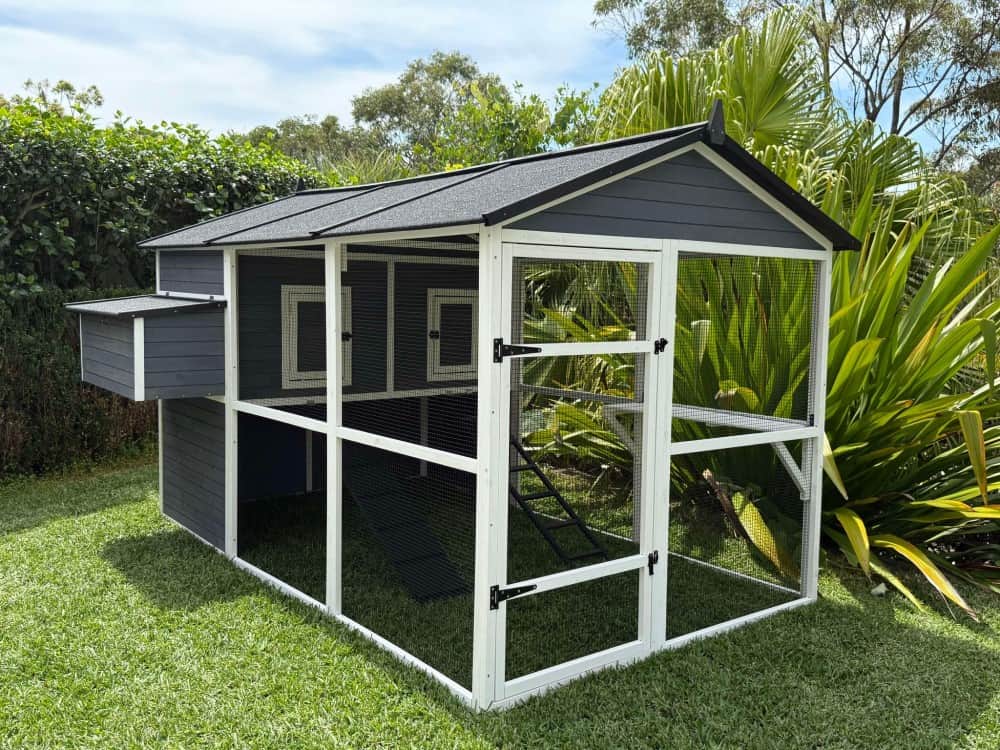
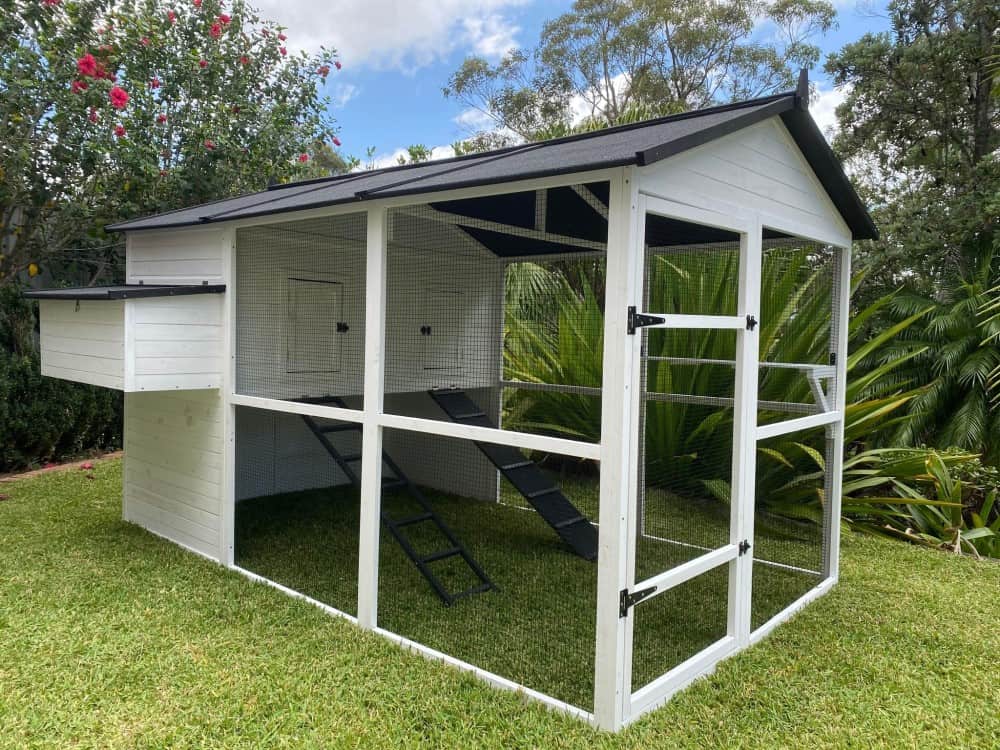
All Products
All Products
All Products
All Products
All Products
All Products

All Products
FAQ
What are the pros and cons of using wood chips vs. straw for chicken bedding?
Wood chips are durable and provide excellent drainage in the chicken coop, reducing the likelihood of mud-related issues, while their larger size helps prevent them from getting compacted too easily. However, they break down slowly and need to be changed less frequently, which can be a positive or a negative depending on maintenance preferences. Straw, on the other hand, is highly absorbent and provides good insulation for chickens during colder months, but it can harbor pests and needs frequent replacement to maintain hygiene.
What should I do if my coop is already muddy?
If your chicken coop is already muddy, remove excess mud and improve drainage by adding gravel or wood chips to the ground. Ensure the coop and run area are slightly elevated to prevent further water accumulation. Additionally, inspect and potentially redirect any rainwater from the coop roof using gutters or by creating drainage ditches.
How do I choose the right ground cover based on my budget?
When selecting ground cover based on your budget, consider the long-term and short-term costs of materials like wood chips, straw, gravel, or grass clippings. Wood chips are relatively inexpensive and durable, offering good value for money over time, while straw provides excellent short-term absorbency at a low cost. Grass clippings are free if you have untreated grass to mow, making them a cost-effective but high-maintenance choice.
What is the best time of year to implement these strategies?
The best time to implement strategies for preventing mud in a chicken coop is during the dry season or early spring, before the onset of heavier rains. This allows ground cover materials to settle and proper drainage solutions to be established without being immediately compromised by wet conditions. Establishing a plan early on ensures your coop is prepared for wet weather, reducing the risk of muddiness and improving the quality of life for your chickens.
How can I tell if my chickens are comfortable in their coop?
Chickens comfortable in their coop will display natural behaviors such as foraging, dust bathing, and nesting without signs of stress like excessive noise or feather pecking. They should have clean, dry feathers and exhibit normal eating and drinking habits. Additionally, the presence of consistent egg-laying and minimal illness among the flock are good indicators of a comfortable coop environment.
Are there specific plants that can help with drainage?
Certain plants such as sedges, rushes, and native grasses can help improve drainage around your chicken coop area. These plants have deep root systems that can aid in absorbing excess water and stabilising the soil. Planting them around the coop can naturally reduce mud formation while enhancing the aesthetic appeal and environmental health of the area.
Toni’s Wrap
With a little bit of effort and some smart strategies, you’ll be well on your way to keeping your chicken coop mud-free.
Remember, it’s all about finding the right ground cover, improving drainage, and maintaining a clean, dry environment for your feathered friends.
By implementing these practices consistently, you’ll not only reduce the stress of constant clean-ups but also create a safer and more enjoyable space for your chickens to thrive.
Related Blogs