


Chickens, Info Guides
Food for Thought: Different Types of Chicken Feed Explained
Jun
 ChatGPT
 Claude
 Perplexity
 Grok
Grok
 Google AI
 You
You
 WhatsApp
 LinkedIn
Ever watch your chooks peck around in the yard and wonder if you’re really giving them everything they need? Trust us, you’re not the only one. It can be difficult to know what to feed your hungry chickens when you first start raising them. There are so many options out there. But fear not, we’re here to help you make sense of it all.
In this guide, we’ll explain the basics of chicken nutrition, from the different types of feed available and the treats your flock will love, to some of the most common feeding mistakes all keepers should avoid. Let’s take a closer look and make sure the next meal your chooks chow down on is im-peck-able!
Key Takeaways
-
Chickens need a balanced diet of protein, carbohydrates, fats, vitamins and minerals, along with constant access to fresh, clean water.
-
Most backyard flocks thrive on commercial chicken feed formulated for their life stage, such as starter, grower or layer feed.
-
Chicken feed comes in different forms including pellets, crumbles and mash, with pellets often being the cleanest and least wasteful option.
-
Grit is essential for digestion because chickens do not have teeth.
-
Treats like fruits, vegetables and mealworms should only make up a small portion of their diet.
-
Seasonal changes, proper nutrition for laying hens and avoiding common feeding mistakes help keep chickens healthy and productive.
- Understanding the Basics of Chicken Nutrition
- What is Typical Chicken Feed?
- The Different Forms of Chicken Feed
- The Role of Grit
- Treats You Can Feed Your Chickens
- What is the Best Chicken Feed for Laying Hens?
- Commercial vs. Homemade Chicken Feed
- Seasonal Adjustments in Chicken Feeding
- Common Feeding Mistakes to Avoid
- Toni’s Wrap
Understanding the Basics of Chicken Nutrition
Before we get into the specifics of what to feed your chickens, it helps to understand what they actually need from their diet. Like all livestock, chickens require a balanced diet of proteins, carbohydrates, fats, vitamins, and minerals to stay healthy and happy.
- Protein is essential for growth, feather development, muscle building and has a strong correlation with egg production. Good protein sources like mealworms are a great way to ensure you’re providing the amino acids needed for optimal chicken health.
- Carbohydrates make up the bulk of most commercial chicken feeds, normally in the form of grains. They provide energy to keep your chooks active and moving throughout the day.
- Fats are important but should be offered sparingly, as too much can lead to obesity. They’re best given during colder months when the extra calories help keep your flock warm. Good sources include sunflower seeds, flaxseeds, and insects.
- Vitamins and minerals support everything from bone development and immunity to digestion and eggshell formation. A quality commercial feed with plenty of vitamin D and trace minerals will cover most of these bases, but supplements can help fill any gaps.
One more thing worth knowing is that healthy chickens typically drink about two to three times as much water as they eat food. Always make sure your flock has access to plenty of fresh, clean water, especially during summer and peak egg-laying periods.
What is Typical Chicken Feed?
Most backyard chicken keepers feed their flock commercial feed, which can be purchased from farm supply stores. When you buy chicken feed, look for options specifically formulated to meet your chickens’ needs at different ages and stages.
Common ingredients include cereal grains, wheat, barley, corn, soybeans, and a range of essential vitamins and minerals. Think of it as a complete feed — a well-rounded meal in every scoop that ensures your chickens receive everything they need to thrive!
In addition to their daily feed, you can treat your chickens to kitchen scraps or extras like tinned corn once in a while. Just be mindful not to overdo it. If your chooks fill up on treats first, they won’t have room for the nutritious stuff, which can affect their overall health over time.
The Different Types of Chicken Feed
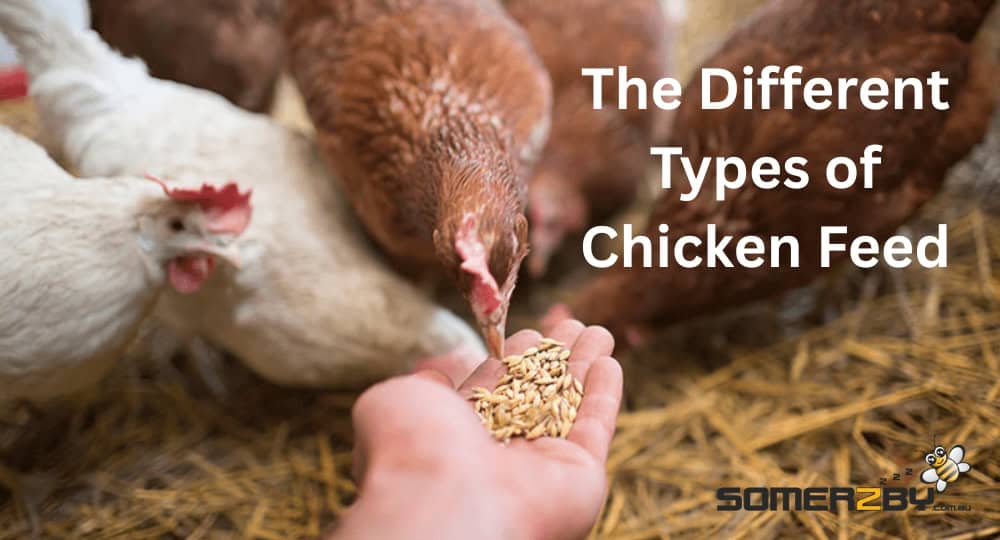
Not all chicken feed is the same. The right type for your flock will depend on your chickens’ age and whether they’re laying eggs. Here’s a handy breakdown.
Starter Feed
Chick starter feed is given to baby chicks from hatching until around 6 to 8 weeks of age. It has a high protein content of around 18-20%, supporting rapid growth and development, while providing essential nutrients and vitamins for young chicks.
Grower Feed
Once your chicks are 6 to 8 weeks old, it’s time to switch to grower feed. This contains a slightly lower protein level, around 15-18%, and is suitable for chickens up to 18 weeks of age. It has less calcium than the layer feed adult chickens eat, which is important at this stage of development.
Layer Feed
When your hens reach around 18 to 20 weeks and begin laying eggs, it’s time to introduce layer feed. It typically contains around 16% protein along with higher levels of calcium to support strong, healthy eggshells. Once your hens are on layer feed, they can continue eating it for the rest of their lives.
Broiler Feed
Broiler feed is formulated for chickens being raised for meat. It has a higher protein content of around 20-22%, promoting fast growth and muscle development. Broiler chickens are often physically larger than laying hens and eat more feed each day.
Medicated Feed
Medicated feed contains additives that help prevent poultry diseases like coccidiosis, an avian intestinal disease caused by parasites. It is typically given to baby chicks before they begin egg production. Always seek advice from your poultry vet before introducing medicated chicken food to your flock.
All-Purpose Poultry Feed
Some chicken keepers prefer an all-purpose feed that works across different ages and purposes, and can even be used for other poultry like ducks and turkeys. These feeds generally have moderate protein levels of around 16-18%. Just keep in mind that the nutritional balance won’t be as optimised as a specialised feed, and most chickens will do better on a feed matched to their life stage.
The Different Forms of Chicken Feed
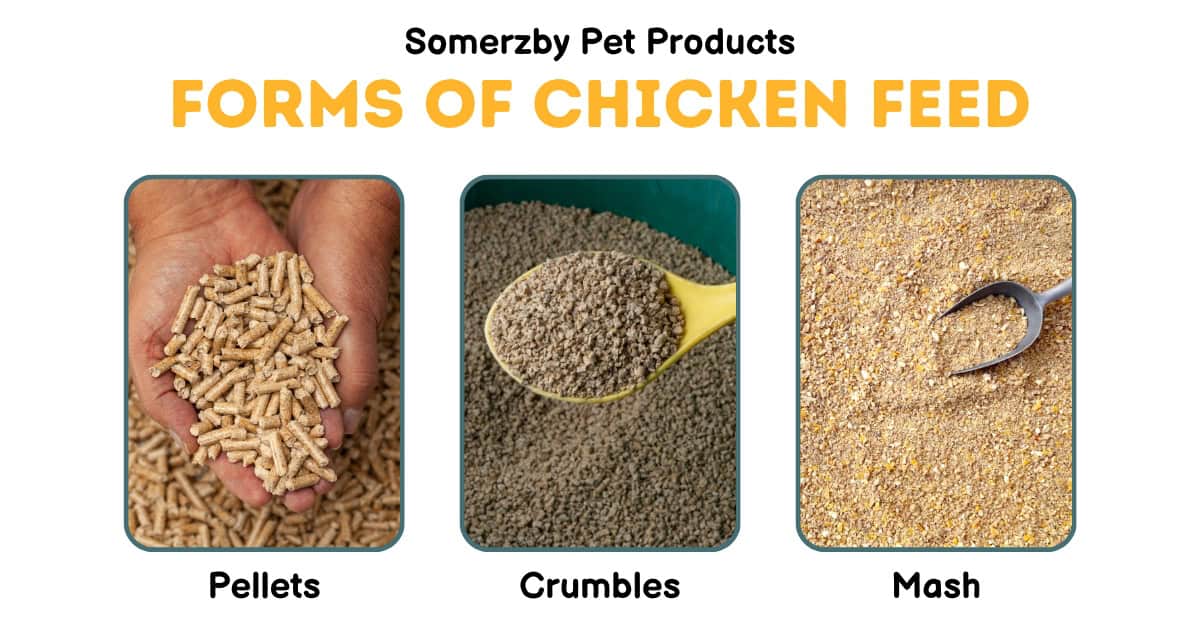
The types of feed listed above can all come in three different forms. There’s no wrong choice here. It comes down to what works best for your flock and your preferred feeding routines.
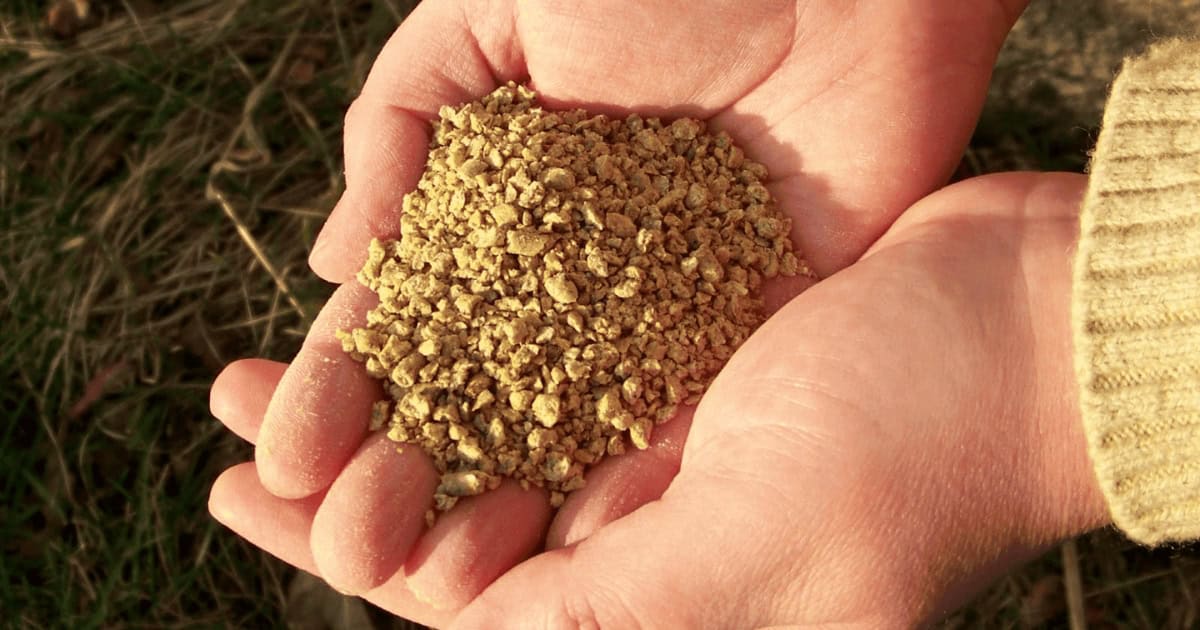
- Pellets: Pellets are small, hard, cylinder-shaped pieces of feed. If you’ve ever seen rabbit food, you’ll know exactly what they look like! They’re easy to store, less messy than other forms, and lead to less wastage. They keep the chicken coop clean and can save you money in the long run.
- Crumbles: Crumbles are essentially pellets that haven’t been fully formed. The smaller pieces make them easier for chickens to eat, which makes them a popular choice for picky eaters. The trade-off is that they can be messier to manage.
- Mash: Feed in mash form is loose and unformed, making it very easy to consume and ideal for smaller or younger birds. It is the messiest of the three forms, which means more wastage and potentially higher costs over time.
The Role of Grit
Here’s something that surprises many first-time chicken keepers: chickens don’t have teeth! Instead, they use grit to help aid digestion. When chickens eat grit, it travels to the gizzard, where it works like a millstone, breaking up grains and other hard foods before they pass into the digestive tract.
If your flock free ranges regularly, they’ll likely pick up small stones and pebbles naturally. If not, you’ll need to provide them with grit. Commercial poultry grit is available from most pet and farm supply stores, or coarse sand can work as an alternative.
Luckily, chickens are pretty good at self-regulating, and they’ll instinctively eat the amount of grit they need. Just make sure it’s always available, and keep an eye out for signs that more is needed, such as changes in feed intake, reduced egg production, or poor shell quality.
Chicks should be given access to chick-sized insoluble flint grit from around 2 to 4 weeks old, as soon as they start eating anything beyond starter crumble.
Treats You Can Feed Your Chickens
In addition to their commercial feed, Australian backyard chickens love a variety of fruits and vegetables as treats. This is also a wonderful way to reduce food waste at home!
Your flock will happily munch on leafy greens, beets, carrots, broccoli, pumpkin, cucumber, cracked corn, banana, strawberries, and apples (with the seeds removed). Vegetables like broccoli and leafy greens are especially great as they’re packed with fibre and nutrients that support your flock’s overall wellbeing. You can also spread a handful of grass clippings for them to peck at, as long as the grass hasn’t been sprayed with chemicals.
When it comes to protein-rich treats, dried mealworms, earthworms, pumpkin seeds, chia seeds, and hemp seeds are all fantastic options, especially for laying hens who need extra protein.
However, there are some foods you should always avoid. Never feed your chickens uncooked beans, uncooked rice, raw potatoes, avocado, onion, garlic, citrus fruits, or anything mouldy. And remember, foraging and treats alone are not enough. Your chickens still need their daily feed to meet their full nutritional needs.
Scratch Grains
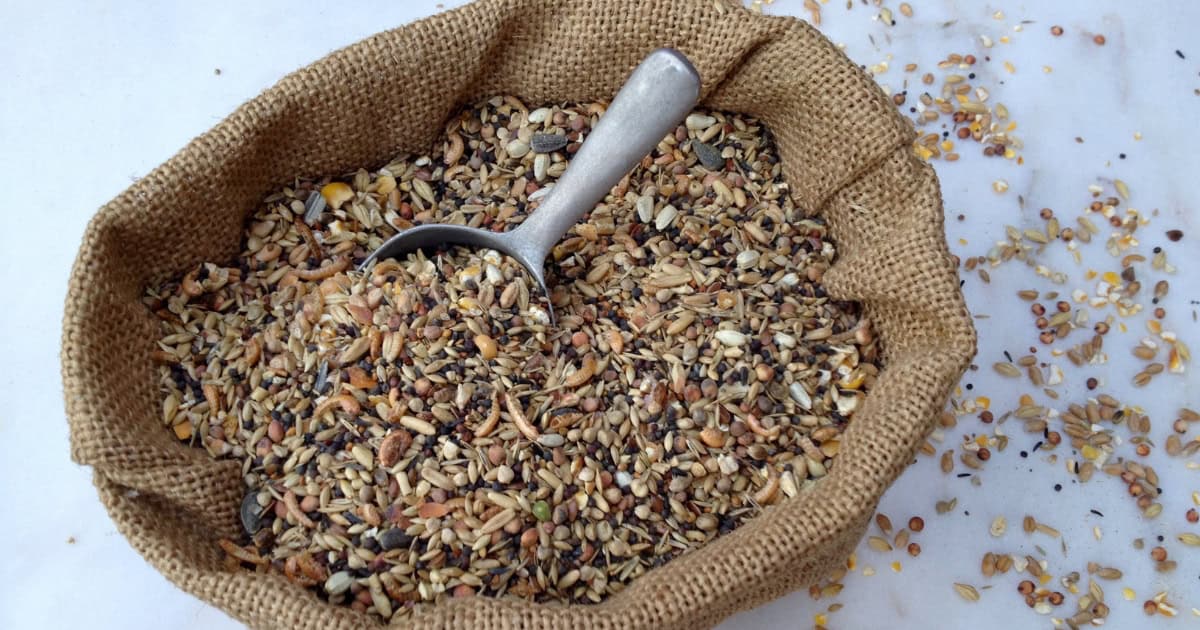
Scratch grains are a mix of whole grains like corn, wheat, and barley that make a great occasional treat for your flock. While they’re not a complete diet on their own, they provide extra energy and encourage natural foraging behaviours, keeping your chickens active and entertained. Use them in moderation as a supplement to your chickens’ regular feed, not a replacement.
What is the Best Chicken Feed for Laying Hens?
A healthy hen that gets the right vitamins and minerals will lay more eggs, so it’s worth putting some thought into what you’re feeding your layers. The right feed improves egg-laying productivity and keeps your hens in great shape for the long term.
Start by checking the protein content of your feed. Most laying hens need around 16% protein in their diet, which works out to roughly 20g per day. Too little or too much protein can impact a laying hen’s egg production, so finding the right balance is important.
Calcium is also especially important for laying hens, as it supports strong eggshell formation. If your hens need a calcium boost, crushed oyster shell grit is an easy and affordable supplement available from most farm supply stores.
It’s also a good idea to check in with your local feed store for personalised recommendations. They’ll know what works well for your region and breed, since every flock has its own unique requirements.
Commercial vs. Homemade Chicken Feed
When it comes to feeding your flock, you have two main options: commercial feed or homemade diets. Both have their merits for convenience and your flock’s health.
Commercial feeds are the most popular choice for good reason. They’re convenient and specifically formulated to meet all of your chickens’ nutritional needs without any guesswork. A premium-quality feed is often the simplest way to ensure your flock gets a balanced diet every day.
If you’d prefer to try your hand at homemade chicken feed, mixing your own feed gives you full control over what goes into your birds’ meals. Making your own chicken feed using home-grown veggies, leftover kitchen scraps, and a base of quality grains can be a great way to add variety and reduce household waste.
For many backyard chicken keepers, a blend of both approaches works best. Use commercial feed as the foundation of your flock’s diet, and supplement with wholesome homemade extras for diversity and enrichment.a
Seasonal Adjustments in Chicken Feeding
The seasons can have a big impact on your chickens’ dietary needs, so it’s worth making a few tweaks throughout the year.
Summer is all about hydration. Keep plenty of fresh water available at all times, and consider adding water-rich treats like cucumber or lettuce to their diet. Egg production can also increase with longer daylight hours, so you may need to up their protein intake slightly.
Winter calls for more energy-dense foods to help your flock stay warm. Corn and oats are great options, but be careful not to go overboard on the carbs.
Autumn and spring are good times for gradual dietary transitions. You can slowly introduce winter feeds in autumn and consider an annual worming treatment in spring alongside regular feed.
As always, these are general guidelines. Every flock has unique requirements, so pay attention to your chickens’ behaviour and adjust accordingly.
Common Feeding Mistakes to Avoid
Even the most well-meaning chicken keepers can fall into a few traps. Here are some of the most common mistakes to watch out for:
- Over-relying on kitchen scraps: Treats are lovely, but too many scraps can lead to an unbalanced diet. Scraps and treats should make up no more than about 10% of your chickens’ overall diet.
- Not providing enough grit: Without adequate grit, your chickens won’t be able to digest their food. Make sure it’s always available, especially if your flock doesn’t free range often.
- Neglecting fresh water: Chickens can drink three times as much water as food. Always keep clean, fresh water accessible. This is especially important in hot weather and during egg production.
- Using an automatic feeder without pest control: Most backyard chicken keepers provide their flock with constant access to food in their run. An automatic treadle chicken feeder is a great way to do this while keeping mice and rats out of the feed overnight.
Toni’s Wrap
Taking care of your flock through good nutrition is one of the most rewarding parts of keeping backyard chickens. Get the basics right: quality commercial feed, fresh water, appropriate grit, and the occasional treat, and your chickens will be happy and healthy and reward you with plenty of beautiful eggs.
Once you’ve settled on your feed of choice, Somerzby’s durable 3 and 6-litre Feeder & Drinker Combo means your chickens have the freedom to help themselves whenever they’re feeling a little peckish!
Related Blogs