


Chickens, Info Guides
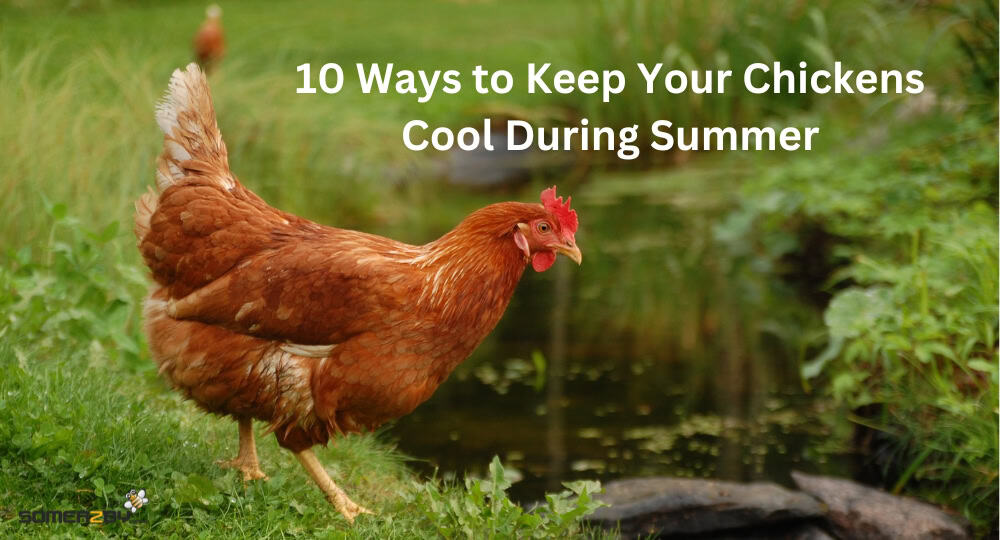
10 Ways to Keep Your Chickens Cool During Summer
Jul
 ChatGPT
 Claude
 Perplexity
 Grok
Grok
 Google AI
 You
You
 WhatsApp
 LinkedIn
When summer hits, keeping backyard chickens safe and comfortable in the heat should be a top priority. Chickens can’t sweat, and extreme temperatures can quickly lead to heat stress (aka. heat exhaustion) or even death if we’re not careful.
Over the years, I’ve learned that a few simple steps can make a big difference in helping my flock stay cool. That’s why I’ve put together this blog, to share the signs of heat stress you should look out for, and 10 practical, tried-and-tested ways I keep my chickens cool during hot weather.
Whether you’re new to chickens or a seasoned keeper, I hope you find these tips helpful for keeping your hens healthy and happy all summer long.
Key Takeaways
- Leghorns, Rhode Island Reds, New Hampshire Reds, Sussex and Anconas are the most heat-tolerant chicken breeds available in Australia.
- Signs your chickens may be experiencing heat stress include panting, drinking more and eating less, seeking shade, dust bathing, holding their wings away from their body, and no longer laying eggs.
- The best way to protect chickens from heat stress in summer is through early preparation and prevention. If you suspect heat stress is occurring, act quickly to save your chicken’s life.
- Provide shade, good ventilation, cool water, frozen treats, misted ground, DIY ice bricks, dust bathing areas, and space to free range. Avoid stressors and contact with metal surfaces.
What Chicken Breeds are Most Heat Tolerant?
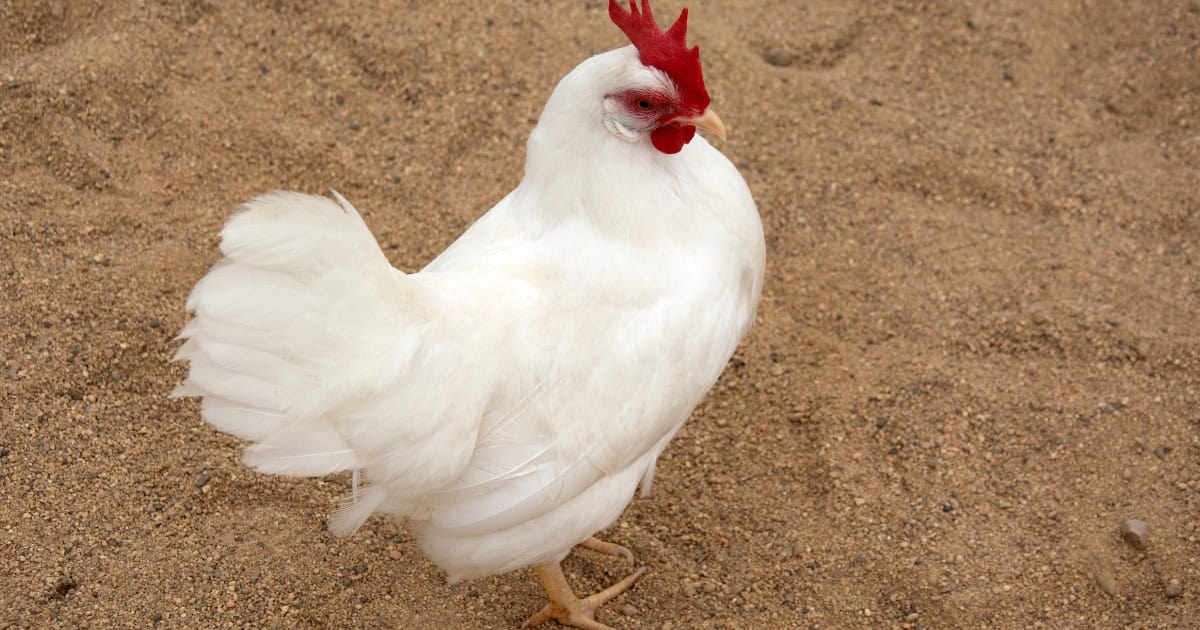
Some chicken breeds are better suited to handle the summer heat than others. The most heat tolerant breeds available in Australia include:
- Leghorn
- Rhode Island Red
- New Hampshire Red
- Sussex
- Ancona
It is debated whether Australorps can handle the heat. As they were first bred in Australia for our conditions, many people say that means they are designed for hot weather. However, many of our customers have reported to us that their Australorps do not do well in extreme heat.
Heavy breeds with thick plumage do worse in the summer heat, this includes Brahmas, Orpingtons and Wyandottes. They were all bred to handle colder climates and their thick feathers will naturally trap heat in, leading to heat stress.
Signs of Heat Stress in Backyard Chickens
When it starts to get hot, keep an eye on your feathered friends. Chickens cannot sweat and have limited ways to cool themselves down.
Most of the below symptoms are normal in small amounts here or there. But if your flock are experiencing these symptoms more than usual, for extended periods or many symptoms at once, they may be experiencing heat stress.
Keep an eye on how your pets behave normally so that you can notice any changes during hot weather. Every flock is different, so understanding your chickens’ individual habits is key to identifying heat stress before it’s too late.
If you suspect heat stress, quickly move them to a cooler area and provide cool water. If their symptoms do not improve, contact your local vet for help. Acting fast can save their lives.
Panting
Chickens, like dogs, don’t have sweat glands and rely on panting to regulate their body temperature. They open their beaks and breathe rapidly, allowing moisture in their mouths to evaporate. This evaporation process draws heat away from their bodies, helping them cool down. It’s a form of evaporative cooling, similar to how sweating works in humans.
Drinking More Than Usual
Chickens will drink cool water to try to lower their body temperature. Excessive panting can also dry out their mouths, motivating them to drink more often.
Eating Less Than Usual
When hot, hens will naturally have a decreased appetite. The digestion process generates body heat, so hens will actively avoid eating as a way to try to stay cooler.
Seeking Shade
Hot chickens will naturally flock to shaded areas to block the heat of the sun. If your chickens are usually scattered across your yard, but today they are grouped together under their coop roof or under trees, that may be a sign they are overheating. They will also typically move less, sitting in one shaded spot rather than roaming around the yard.
Dust Bathing
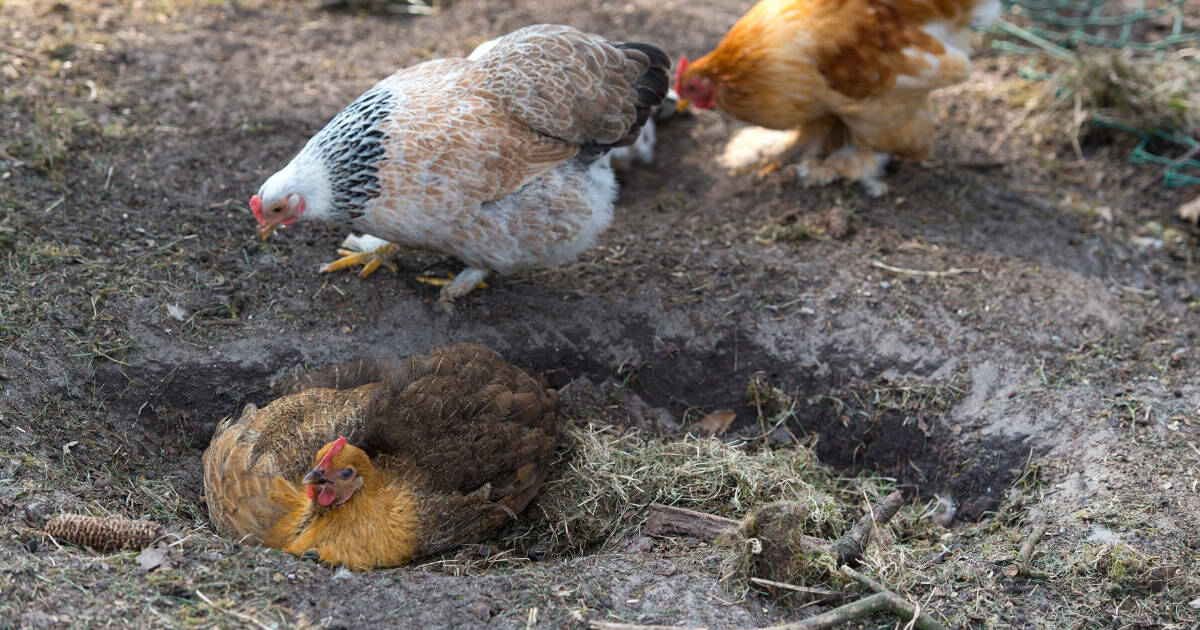
Chickens roll around in the dirt, scratching it up with their feet and try to cover themselves in as much dust as possible. This is known as dust bathing. It helps to absorb excess oil in their feathers which can trap heat. It also provides a layer of insulation, which helps regulate their body temperature.
Holding Wings Away from Their Body
When chickens feel hot, you may notice them spreading their wings and holding them away from their body for extended periods. This allows cool airflow against their skin and helps lower their body temperature.
Not Laying Eggs
When a hen’s core temperature is too high, she will temporarily stop laying eggs. This is usually a side effect of the other heat stress symptoms – feeling stressed, eating less and moving around less can all negatively impact egg production.
How to Keep Chickens Cool in Summer
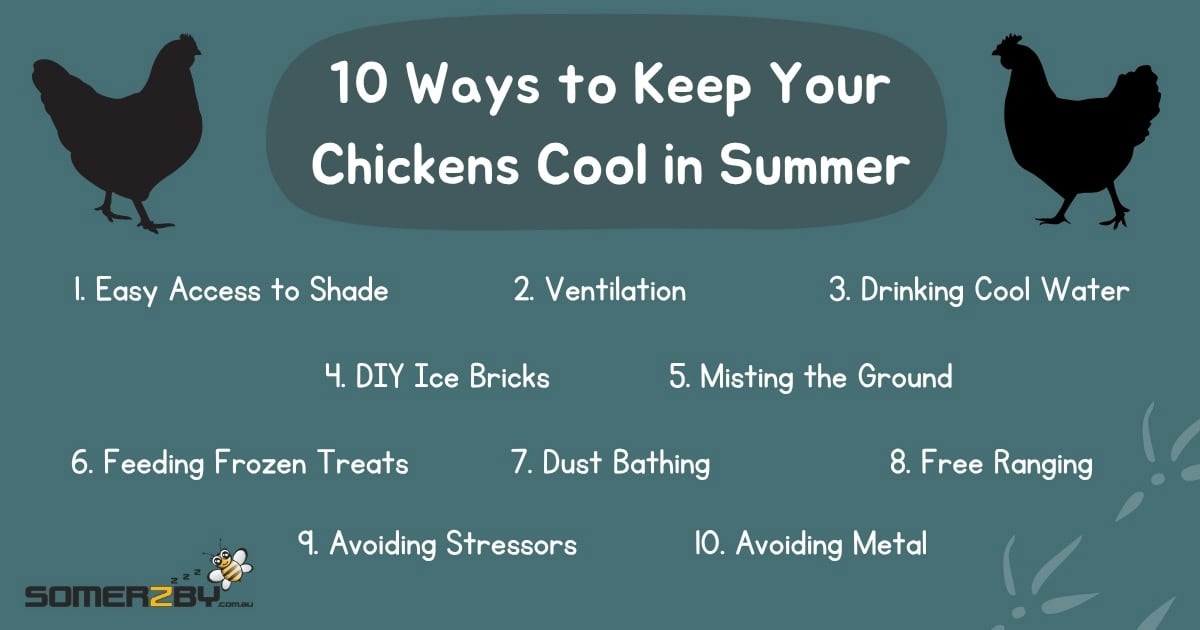
The best way to protect chickens from heat stress is prevention. During summer, if I know we’re going to have a hot day, I will do the 10 actions below ahead of time to keep my flock comfortable.
1. Easy Access to Shade
Provide shade to help keep your chickens out of direct sunlight. If they are locked inside their chicken coop and run during the hottest part of the day, add shade with a tarp, an old sheet or an umbrella. Be careful not to accidentally block ventilation.
2. Ventilation
Ensure your chicken coop has plenty of ventilation, allowing hot air to escape and cool air to come in. Hot air rises so it’s best to have this window as high up as possible in the roosting area. You can use an electric fan to help improve airflow, although make sure it is safe to use outdoors and that your hens won’t be able to damage the cord.
3. Drinking Cool Water
Drinking water helps hens cool down quickly, so ensure they have constant access to clean, fresh water. On hot days, you may need to refill their drinker more frequently. Replacing warm water every few hours with cool water, and adding a few ice cubes, can help keep it at a refreshing temperature for longer.
4. Frozen Bottles
In the summer months, fill old plastic bottles halfway with water and freeze them to create DIY ice bricks. Keep a few in your freezer so they’re ready for hot days. Place them in the chicken coop to help lower the temperature. Your hens may even sit near them to enjoy the cooling effect.
Tip: Avoid using gel ice packs as they can break open and the gel inside may be toxic if your birds ingest it.
5. Wetting the Ground
Chickens will lose heat through their feet so wetting the ground of your chicken coop floor may help to cool them down. Be careful not to oversaturate, if the coop gets muddy they won’t be able to dust bathe and it may get smelly. A light misting will do the trick!
Tip: Don’t wet your chickens directly as this will stress them out which in turn will warm them up.
6. Feed Chickens Frozen Fruits and Vegetables
Feeding your hens frozen fruits and vegetables is a great way to help them stay cool. These hydrating treats provide extra water and can help lower their body temperature on hot days. Simply chop food scraps into small pieces and freeze them ahead of time so they’re ready when needed. My chooks especially love eating frozen blueberries, watermelon, peas and corn!
7. Dust Bathing
Help your flock cool themselves down by providing patches of dirt where they can scratch and dust bathe. They will roll around in the dirt, using it to absorb excess oils and naturally insulate themselves. If you have a large flock, allow them access to extra dirt areas on warm days.
8. Free Ranging
If possible, allow your flock to free range in the largest area possible when hot. They will naturally find the coolest area, sometimes in a spot you may not have even considered. Most chickens are good at seeking out cool soil, hidden shade or breezy corners that offer relief from the heat.
Tip: Providing access to a larger space also helps reduce overcrowding, which can make heat stress worse.
9. Avoiding Stressors
When chickens are stressed, their body temperature will naturally go up, worsening heat stress symptoms. During summer, go the extra mile to keep your flock relaxed and comfortable. Ensure the coop is clean, quiet and free from stressors. Keep predators out of the yard, minimise loud noises, and discourage pets or energetic children from disturbing the chickens.
10. Avoiding Metal
Metal is a good conductor of heat and will feel hotter than other materials when in direct sunlight. We never recommend metal chicken coops, as they will get extremely hot in summer. Somerzby chicken coops are all made from timber, which is a natural insulator and will stay cooler.
If your hen house does have any metal sections, including metal flooring, we recommend covering these on hot days so your chickens won’t burn their feet on them. If possible, replace metal sections entirely.
FAQ
What temperature is too hot for chickens?
While it can vary from breed to breed, chickens may experience heat stress when the temperature is 30 degrees Celsius and higher. This is quite common in the Australian summer, so always take preventative measures to help your hens.
Can chickens die if they get too hot?
Yes, chickens can die in extreme heat. If their core temperature is too high for too long, they may experience organ damage, respiratory issues and seizures, all of which could result in death.
Do chickens like fans blowing on them?
Using fans to increase the airflow inside your chicken coop will help your hens stay cooler. Blowing fans directly onto your chickens will have minimal impact and will most likely annoy them.
Toni’s Wrap
As a chicken owner who adores her girls like family, I know just how important it is to protect them from the dangers of summer heat. Heat stress can come on quickly and, if left unchecked, can sadly be fatal. That’s why prevention is key, by acting early and preparing your coop and yard in advance, you can help your flock stay happy, healthy and cool.
In this blog, I covered the most heat-tolerant breeds available in Australia, the signs of heat stress to watch out for, and my top 10 ways to keep chickens cool. Every flock is different, so it’s important to observe your chickens closely and adjust your setup to suit their needs.
With a little care and planning, your hens can breeze through summer safely. Plus, you’ll enjoy peace of mind knowing they’re comfortable and content.
Related Blogs